Sanna Hyotylainen

Master’s degree in International Security from the University of Groningen with a focus on energy and resource security. Currently involved in VNG International’s projects in Middle East and North Africa, including Egypt, Tunisia, and Oman. Thematic focus on sustainable development, water, participative governance, and decentralization reforms.
How can local governments in conflict-affected regions act to reduce the impacts of violence and insecurity on development, and what kind of action can aid later on in peacebuilding processes and post-conflict reconciliation?
-
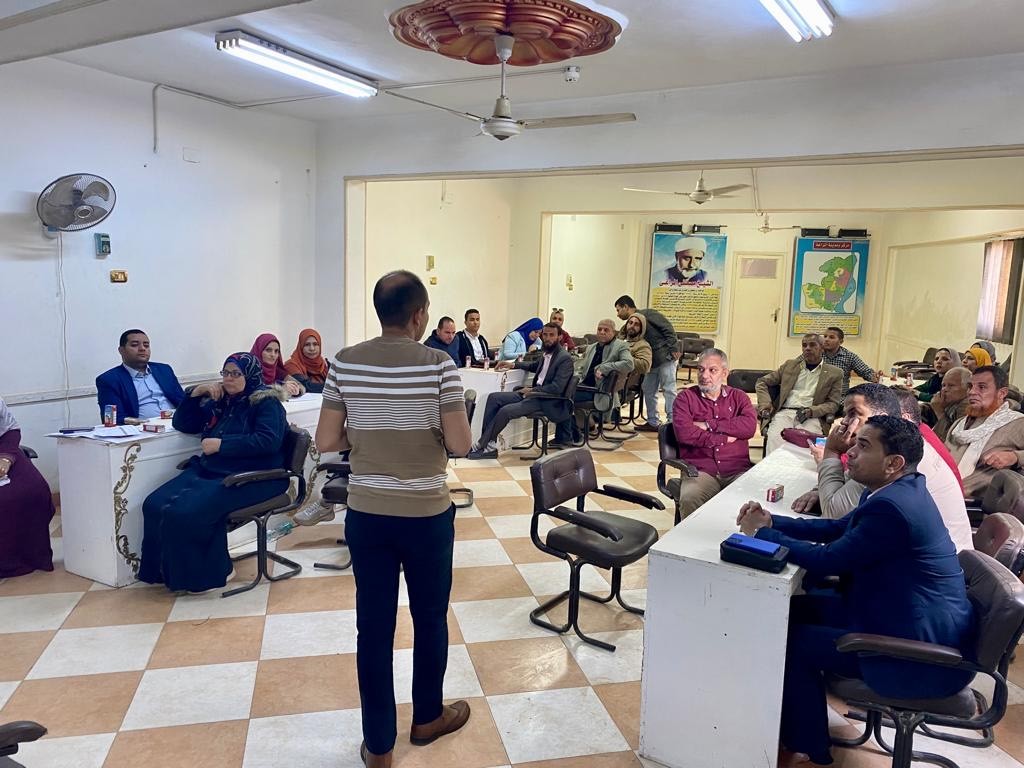
The objective of the Upper Egypt Local Development Program (UELDP) is to improve the business environment for private sector development and strengthen local government capacity for quality infrastructure and service delivery in Qena and Sohag Governorates in Upper Egypt.
The Program aims to:
i) improve the business environment and economic competitiveness
ii) close the persisting gaps in access to and quality of infrastructure and services. -
Objective:
The overall objective of the project was to contribute to the democratic transition process and the stabilisation of Libya.
The specific objectives were (1) Libyan public institutions at local and national level demonstrate increased capacities, enabling the environment for effective service delivery; (2) Libyan municipalities and other local level public institutions are better empowered to enhance social cohesion through good governance and local economic development increasing employment among youth and women; and (3) Local capacities are strengthened to promote collaborative governance and extensive participation in the transition process among the Libyan population
The project was implemented by a consortium composed of VNG International (The Hague, The Netherlands) as lead applicant and Democracy Reporting International (DRI; Berlin, Germany). The Centre for Innovative Local Government (CILG; Tunis, Tunisia), daughter company of VNG International, was involved as Affiliated Entity.`
The logic of the intervention was built upon four main axes:
- Capacity strenghtening of beneficiaries through workshops, trainings, seminars, forums, round tables etc. aimed at improving beneficiaries’ skills in specific areas, creating space for exchange / reflection at the local and national levels and preparing local authorities, CSOs and partner institutions to introduce the expected organizational changes.
- Organizational and methodological technical support through manuals, tools, guides and products introducing new management practices and governance of local affairs. This second axis of intervention also included the institutional support actions to the partner organizations
- Organization of study visits and exchange of experience in countries of the MENA region and the EU. The participants of these study visits were selected through a selection process based on competencies, motivation, and experience, aiming a diversity in geography, age, and gender.
- Support for municipal pilot projects in the areas of governance and local economic development, associative projects promoting the participation of young people and women. The purpose of these pilot projects was not to grant donations to municipalities or associations but rather to concretize ideas and pilot projects in the context of local economic development, local governance, associative life and inter-communal cooperation.
The beneficiaries of this project were defined at three different levels, namely the level of Libyan governmental institutions on the local and central level, the level of key change agents and the level of the general population. ‘Key change agents’ were representatives of the beneficiary public institutions that promote and enable constructive reform and empowerment to happen within and between their organizations.
The consortium applied an adaptive approach to respond quickly to requests that came in from the Libyan stakeholders and to quickly adapt to the changing political and institutional situation in Libya. A six-month inception phase took place prior to the implementation. Activities were then implemented under the following three components related to the three specific objectives.
Component 1: Institutional support enabling the environment for effective service delivery
1.1 Joint research initiatives and data collection to strengthen the knowledge base and increase understanding of the specific contexts, resulting in 4 published studies
1.2 Support for think tanks, researchers and academics and experts to conduct comparative case studies, to identify a common basis or starting point for the transition and help orient policy-making
1.3 Support for the CoR Nicosia initiative to devise a strategy and approach to connect with, support and build further upon their efforts
1.4 A modular training approach on participatory municipal planning, connected with the possibility of providing financial support for pilot projects
1.5 Expert/advisory missions to Libya for on-the-job training, coaching and advice
1.6 Pilot projects: funding opportunities for local level institutions for the execution of their projects
1.7 Specific trainings for municipalities in the field of newly decentralised tasks
1.8 Study visits to countries in the MENA-region and the EU
1.9 Support for the donor community and the Libyan government with a functioning coordination mechanism on local governance and decentralisation.Component 2: Empowering Municipalities to enhance social cohesion
2.1 Support for a group of Libyan thinkers to provide policy recommendations to relevant stakeholders, such as UNSMIL and national government institutions
2.2 Support for the further development of a municipal council coordination platform
2.3 Embedding of advisors or experts at Libyan public institutions to contribute to improving systems, organizational design and practices, efficiency and effectiveness and legal frameworks, policy and law-making
2.4 Development of a web-based platform through which (international) organizations present their activities in Libya.Component 3: Participatory policy making and civic engagement
3.1 Modular trainings for municipalities in topics related to governance and service delivery, including on participatory policy making and public consultation
3.2 Active and inclusive engagement of CSOs and other citizen representative groups and networks in the action’s activities
3.3 Support – in a multi-stakeholder fashion (involving citizens and CSOs) – for municipalities to address identified recommendations for civic engagement
3.4 Trainings of Trainers to empower selected civil society organisations to hold a series of awareness raising sessions in the selected municipalities on civic engagement
3.5 Trainings of Trainers with civil society partners and law faculty students to hold informative Town Hall Meetings in selected municipalities on the right to vote, elections and a critical reflection on the constitutional text. -
Objective
The wider objective of the project is to support the decentralisation process in Tunisia.
The specific objectives are linked to the three components of the programme: Decentralisation (Outcome 1), Local Economic Development (Outcome 2) and Participation & Accountability (Outcome 3).
The project will contribute to a framework for taking the decentralisation process a step ahead. This effective and operational framework should enable the decentralisation process in a way that furthers social cohesion. This would be possible with the Ministry of Local affairs and the Environment (MoLAE) fulfilling its mandate as a driver and conflict preventer in the decentralisation process. The transfer of the competency of urban planning from the Ministry of Equipment to the municipalities as defined in the Code des Collectivitãs Locales will be accompanied too. As decentralisation is a multi-actors process and there is a risk of divergence and conflict between actors, the project aims at setting a functioning mechanism for constructive and social peace building multi-stakeholder dialogue. For the same reasons of social peace and in order to make the decentralisation credibly profitable for all citizens, the assistance to the reforms will consider that the operational framework of decentralization must reflect the specific needs of women, youth and disenfranchised groups.
Furthermore, the project aims to get a more rights-based, more conflict sensitive approach to service delivery of the ground in the target municipalities, while still looking at classical data on services’ coverage, accessibility, efficiency and quality. Two main competencies of municipalities will be considered: public spaces and waste management. These two competencies have an important impact on the living environment of citizens. The project will also make sure that this improvement of municipal services will specifically address the needs of women, youth and disenfranchised groups. In addition to improved and inclusive service delivery, the project aims at helping municipalities generate better opportunities for local economic development and job creation. A better living environment is not only a matter of services but should also include the way to improve local economic conditions and job creation, as an alternative for youth limiting illegal migration and reducing the risks of radicalisation.
The project aims at consolidating a social cohesion/social contract dynamic between citizens and local governments. This essentially aims to improve of the performance of municipal participatory and accountability frameworks and with it especially the participation of women, youth and disenfranchised groups. This is based on the idea that both the ‘demand’ and the ‘supply’ of accountability need to be there for something meaningful to happen. Apart from the dialogue tables and the mechanisms, we will look to urban planning and concrete pilots of component 2 to provide substance that local accountability can coalesce around.
The expected results of the project are:
- An effective operational framework for decentralisation is in place
- The living environment for all citizens is improved enhancing territorial belonging and discouraging illegal migration and radicalisation among youth
- Constructive engagement for social cohesion between citizens and local governments is consolidated
Outcome 1
- Technical assistance to the Ministry supporting the revision of the Roadmap and the development of the monitoring system
- Trainings for the staff of the MoLAE and the Ministry of Urban Planning on managing decentralization in social cohesions terms (may be combined with other training)
- G2G exchange activities NL-TN
- Production of draft regulation for the decentralisation of urban planning sensitive to conflicts over space and access to services and resources
- Production of background analysis on the conditions for decentralization of urban planning competence and scenario planning
- Production of urban planning management guidelines adapted to decentralized mandates in fragile urban contexts
- Training of the staff of the MoLAE and Ministry of Urban planning at central and regional levels (may be combined with other training)
- Improve the Decentralisation Commission’s platform for exchange on the decentralization process and take the notion of legitimate stability to this platform
- Coaching and training of institutions and CSO to take part in dialogue mechanisms (may be combined with other training)
- Preparing media material on how many perspectives there actually are, and need to be included, in the decentralisation process
- Design of a regional platform for exchange on the decentralization process
- Expertise and logistical support to set-up the regional exchange platform
- Coaching and training of local stakeholders (including training for elected officials in cooperation with CFAD, and for CSO) to take part in dialogue mechanisms (may be combined with other training)
- Revision of legal documents, guidelines and other policy documents from a gender/youth/rights of disenfranchised groups perspective
- Coaching and training for national and regional level stakeholders on women’s, youth and disenfranchised groups rights. (may be combined with other training)
Outcome 2
- Expertise and logistical support to the municipalities for the development of the City Development Strategy
- Workshops and sensitization conferences for elected council members and the mayor on the rights-based approaches to service delivery
- Option of pilot projects: introduction of open source GIS and reinforcement of Information Management systems
- Implementation of a management development programme for staff at the municipalities
- Implementation of existing organization and financial development programmes (PDIC and AFOC) at municipalities
- Development of municipal plans in the areas of Public Space Management and Waste Management
- G2G exchange activities NL-TN
- Training and coaching activities in the implementation of the municipal plans for public space and Waste management (may be combined with other training)
- Option of pilot projects in public space and waste management
- Expert and logistical support to the municipalities for the development of the Economic Development Strategy
- Workshops and sensitization conferences for elected council members and the mayor on local economic development
- G2G exchange activities NL-TN
- Expertise and logistical support to the municipalities for the development of the establishment of the Municipal Business Forum
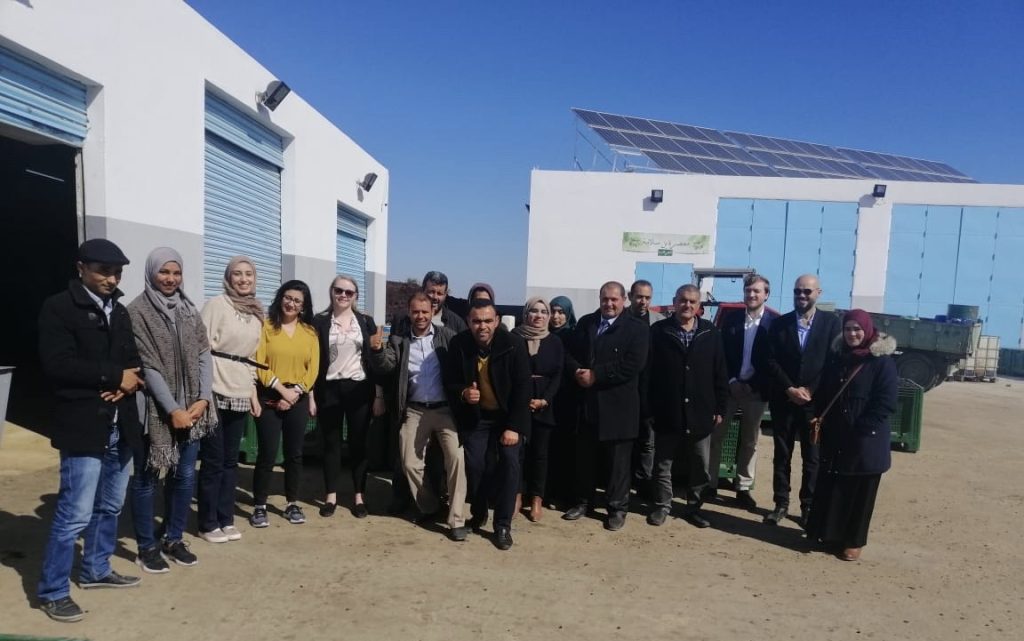
- Option: LED pilot projects such as pumps powered by solar for agri
- Inclusion into City Development Strategy, the Economic Development Strategy and the Public Space and Waste Management plans of gender/youth/ disenfranchised groups needs
- Option: local economic development pilot projects led by women entrepreneurs (not vocational training, tangible projects)
Outcome 3
- Technical assistance to municipalities for the development of key documents in the area of Urban Planning and Investment planning
- Training of local officials on effective management of participatory forums in the areas of Urban Planning and Investment Planning
- Logistical support for public meetings required by regulations
- On the job coaching
- Training of local stakeholders and citizens to take active part in participatory policy-making forums (may be combined with other training)
- Development of the score cards and service delivery standards
- Development of open one-stop shop events and electronic versions with web-based tools for collecting citizens’ complaints and rapidly dealing with them
- Sensitization workshops with elected councillors and the mayor on the use of participatory accountability mechanisms (may be combined with other training)
- Training of local officials on the use of participatory.